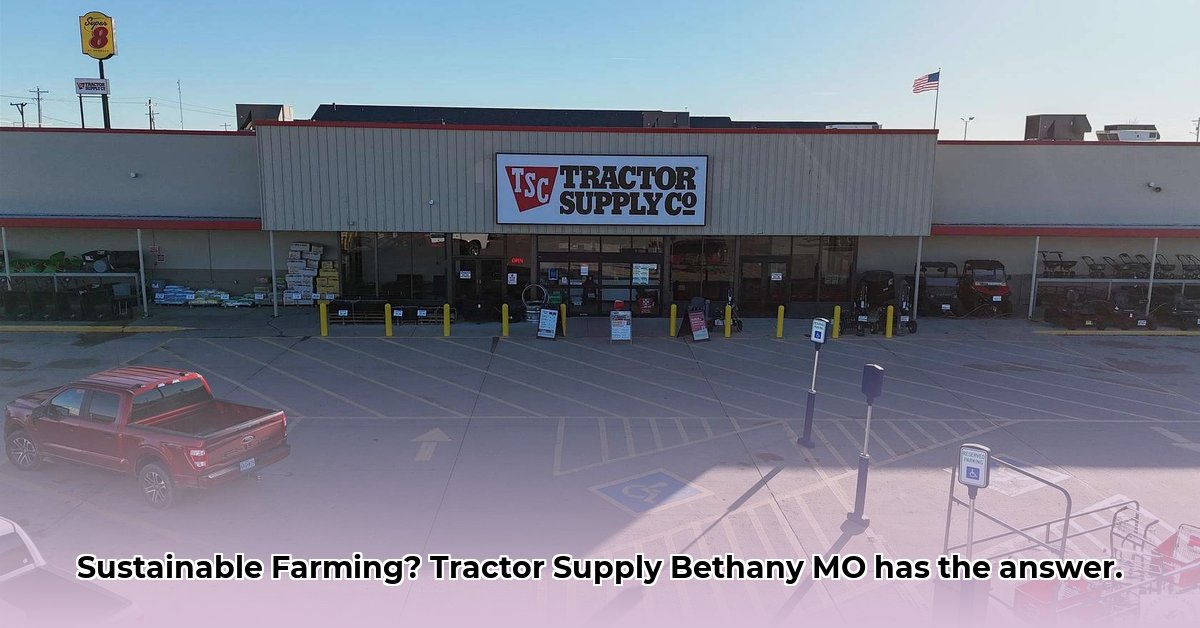
Tractor Supply Bethany, MO: Your Partner in Sustainable Agriculture
Tractor Supply Company (TSC) in Bethany, Missouri, serves as a vital resource for local farmers and gardeners. But how effectively does this retail giant contribute to sustainable agricultural practices within the community? This article explores TSC's role in supporting sustainable farming, examining its product offerings, assessing its overall impact, and offering actionable steps for both consumers and the company to foster a more environmentally responsible approach to agriculture. For those considering investing in equipment, find out more about tractor pricing.
Tractor Supply's Product Offerings and Sustainable Agriculture
TSC Bethany offers a wide range of products potentially supporting sustainable farming. Seeds for diverse crops, hand and power tools for various farming needs, livestock feed, and water management systems are all readily available. The availability of these products empowers local producers to adopt sustainable practices. For instance, access to drought-resistant seeds helps lessen water consumption, a critical aspect of sustainable agriculture. However, a crucial question remains: How sustainably are these products sourced and produced? Do they prioritize organic choices, and what is TSC's overall environmental footprint in production and shipping? Transparency in this area is essential for judging the true sustainability of TSC’s offerings.
Analyzing Tractor Supply's Impact: A Balanced View
TSC's influence on sustainable agriculture in Bethany presents a complex picture. Its convenient location allows farmers and gardeners to access essential supplies locally, thereby decreasing reliance on distant, potentially less sustainable sources. This accessibility is a clear advantage, supporting local food production and reducing transportation emissions associated with long-distance shipping. However, a lack of comprehensive public reporting on sustainability initiatives hinders a complete evaluation. Without detailed information regarding their supply chain practices, it's challenging to assess the environmental impact of their products. The absence of a robust sustainability report limits transparency and raises questions about their overall commitment to environmental responsibility. This lack of transparency necessitates a call for TSC to adopt more open reporting of its environmental performance. Isn't transparency a cornerstone of responsible business practices?
Actionable Steps: Consumers and Tractor Supply Working Together
Despite these limitations, significant positive change is possible through both individual consumer actions and proactive steps from TSC.
Actionable Steps for Consumers:
Become a Label Detective: Look for certifications such as "USDA Organic," "Non-GMO Project Verified," and "Fair Trade Certified" to guide your purchasing decisions. These certifications provide verifiable assurance of sustainable practices.
Reduce, Reuse, Recycle: Remember the 3 R's. Bring reusable bags, minimize packaging waste, and choose products with minimal packaging whenever possible.
Engage with TSC Staff: Ask questions! Inquire about the sourcing of products and TSC’s sustainability initiatives. Increased consumer engagement encourages the company to prioritize these issues. Your voice matters.
Support Local and Regional Producers: Whenever possible, support local farmers and businesses. Even purchasing from local suppliers through TSC helps.
Actionable Steps for Tractor Supply:
Expand Sustainable Product Selection: Drastically increase the offerings of organic and sustainably produced goods. Consumer demand for ethical and environmentally friendly options continues to grow.
Publish a Sustainability Report: Create a transparent annual report detailing supply chain practices, waste management strategies, and energy efficiency goals. Transparency fosters trust with consumers and stakeholders.
Collaborate with Local Organizations: Engage with local groups focused on sustainable agriculture. This will provide feedback, expertise, and enhance their community standing.
Invest in Employee Training: Equip staff with the knowledge to effectively guide customers toward sustainable product choices. Trained staff can act as valuable advisors.
Conclusion: A Shared Responsibility
Tractor Supply in Bethany, MO, holds significant potential to influence sustainable agricultural practices in the community. However, realizing this potential requires a proactive commitment to transparency and environmentally friendly actions from both the company and its customers. By embracing the actionable steps outlined above, TSC can demonstrate its commitment to environmental stewardship, enhancing its reputation and supporting the sustainable future of Bethany's agricultural community. The path toward a truly sustainable agriculture sector is a journey best traveled collectively.